Let Your Home Breathe and Live the Way the Samurai Did
Creating calmer spaces through seasonal living and samurai philosophy

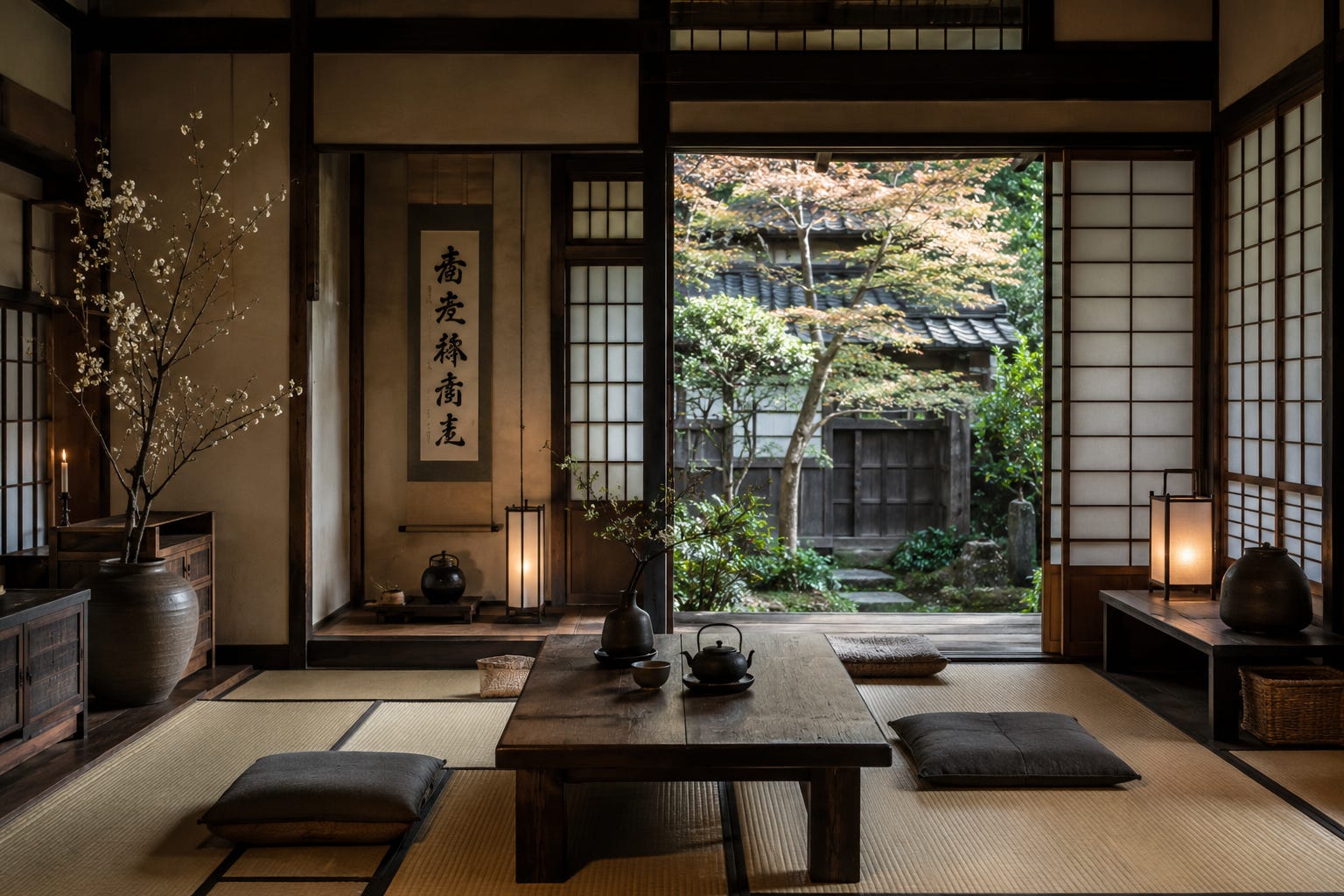
created with AI assistance for The Earth & Flame
In Japanese Kaso (家相) of the home, Japan’s version of feng shui, the home was treated as a living, breathing part of the family. Interiors shifted with the seasons and natural fibres were used in a more minimal style to encourage airflow, calm and harmony within the space. Rather than filling a room with excess, samurai homes focused on balance, softness and allowing the home itself to breathe alongside the people living within it.
Flow and movement within the home were considered deeply important in samurai households. Rooms were designed to allow light, air and energy to move naturally from one space to another without heaviness or obstruction. Clutter was believed to create stagnation, not only within the home itself but within the mind. By keeping interiors intentional and seasonally balanced, the household remained calmer, clearer and more connected to the rhythms of nature.
Spring
In samurai households, spring was treated as a season of renewal and quiet preparation. Heavy winter layers were removed, windows were opened more frequently and lighter textures slowly returned to the home. Interiors often shifted toward softer neutrals, pale greens, muted blossom tones and natural woods inspired by the changing landscape outside.
Linen, lighter cottons and woven grasses were used to encourage airflow and brightness after the heaviness of winter. Seasonal branches and fresh florals were brought into the home with restraint, allowing nature to enter without overwhelming the space. Rather than dramatic redecorating, samurai homes embraced subtle seasonal shifts that allowed the household to feel calm, refreshed and awake again.
Summer
Summer in samurai homes focused heavily on breathability, stillness and relief from heat. Interiors became lighter and more open with fewer objects, softer lighting and natural materials chosen specifically to cool the atmosphere of the room.
Bamboo, rush grass, linen and paper elements helped create both physical and visual coolness. Colours often leaned toward soft whites, pale blues, natural greens and washed neutral tones to quiet the eye during the humid months. Shoji screens were opened more frequently and flowing fabrics helped air move gently throughout the home.
The philosophy was simple. Remove heaviness wherever possible so the home itself could breathe.
Autumn
Autumn brought a return to warmth, grounding and reflection within samurai households. The airy softness of summer gave way to deeper earth tones such as charcoal, persimmon, rust, dark cedar and muted gold.
Homes often incorporated thicker textiles, layered textures and warmer lighting as evenings grew longer. Heavier cottons, woven fabrics and handcrafted ceramics with darker finishes helped create a more settled atmosphere throughout the home.
Autumn was considered a season of quiet discipline and inward focus. The home reflected this through warmth, simplicity and a slower rhythm of living.
Winter
Winter in samurai homes centred around intimacy, restoration and quiet endurance. Rather than filling spaces with excess decoration, interiors became smaller in feeling, softer in light and heavier in texture to create emotional warmth during the colder months.
Wool blends, thicker cottons, layered floor coverings and darker woods helped create a cocoon-like atmosphere. Colours deepened into warm creams, black, cedar brown and muted reds that reflected firelight and shadow.
Daily rituals became especially important during winter. Hot baths, tea preparation, simmering soups and lower lighting helped slow the pace of the household. In samurai philosophy, the home was not simply protection from winter but a place to restore strength, clarity and balance before spring returned again.
Villas & Private Residences
Even while travelling, the philosophy still applies. For extended stays in villas and private residences, samurai principles can still be carried into temporary spaces through natural fibres, softer lighting, calming rituals and keeping rooms open and uncluttered. Tea, candles, linen textiles or a familiar scent can help transform even an unfamiliar space into something more grounded and restorative. The goal was never perfection but creating an environment where both the home and the mind could breathe together.
Zen philosophy says, “The outer world is a reflection of the inner mind.” Keeping the home uncluttered, open and free flowing was believed to help the mind and thoughts remain the same, bringing the philosophy full circle within the household itself.
Travelling with children doesn’t mean shrinking your experience. It just means choosing cities that refuse to split joy into age brackets.
These destinations make space for all of it. Lanterns and music. Festivals and family dinners. Culture without compromise.
For those navigating the world as single parents or entrepreneurial travellers, I’ve begun mapping itineraries, guides and curated lists that lean into calm, curated, luxury experiences. You can find them in the Shoppe or by following the link to the website.
Enjoyed the ride? Share this piece with a fellow traveller!
You Might Also Like
For readers living within intentional households: how is balance created through design? Are softness and structure given space to coexist? Share how the home supports daily rhythm, recovery and work. Contributions are welcome below.
If your property or experience champions culture and the quiet art of hospitality, I welcome conversation. The Earth & Flame collaborates with hotels and services that support intentional travel and uphold the standards of discreet, private-club level hospitality, with coverage created on location through itineraries, guides and editorial features.
Work With Me
The Earth & Flame collaborates with private residences, villas, hotels and refined travel services that value culture, discretion and the quiet art of hospitality. Coverage is created on location through itineraries, guides and editorial features written through the lens of solo founder parent. Each partnership is shaped with intention and respect for heritage, design and the experiences that make a place worth returning to.
If your property or service aligns with intentional travel and private sector standards, I welcome conversation.
Enquire About Editorial Coverage

I write and global entrepreneurial life. Work spans food, heritage, design and the rhythm of intentional living, with a focus on places and experiences that honour craft and character. From farm-to-table traditions and world coffee culture to destinations that support refined family travel, each feature is approached with curiosity and depth.
For properties that align with private club standards and thoughtful travel, or for stories that honour intention and elegance are always worth a conversation.
Thanks for reading and being part of The Earth & Flame!