

created with AI assistance for The Earth & Flame
Many think that manners and etiquette are about which fork to use when. However, fewer know that it isn’t so much about which fork but about what it signals and where it is placed means. But what if by placing your forks tines down you just earned more respect in the room and eagerness to deepen your guests’ association with you because of what you just indicated. And until now you have no idea what tines down meant for all those who do.
The Language of the Table
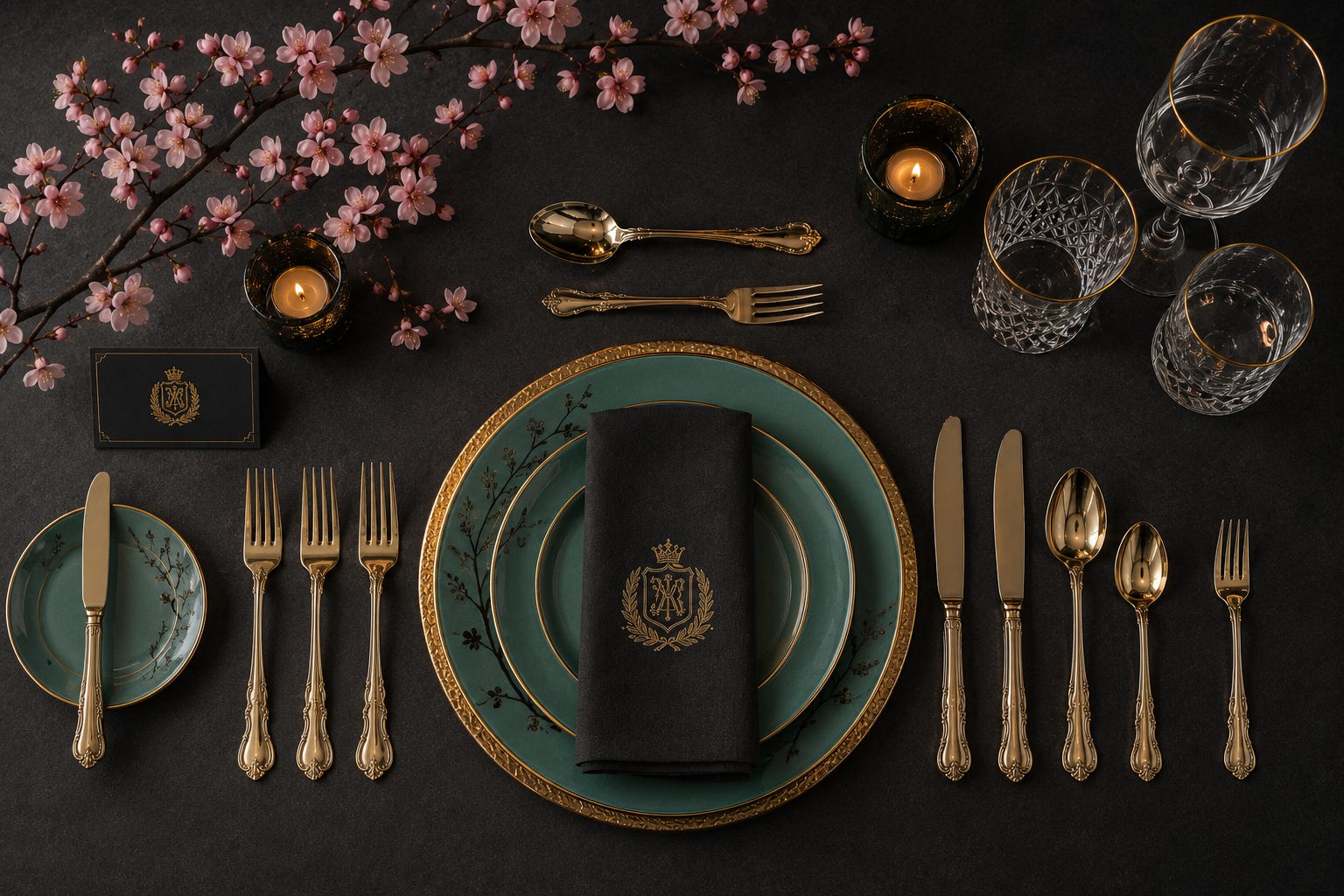
The placement of each fork on the table is not decorative. It is a timeline. Before the first guest is seated and before the first dish leaves the kitchen, the table is already narrating the evening. Every fork placed tells the story of what is coming and in what order. Those who know how to read it arrive at the table already oriented. Those who do not simply follow the outside in rule and never miss a beat. Either way the table has done its work.
Working from the outside in, the outermost fork is always the first to be used. It is the opening line of the meal’s story. The dinner fork sits closest to the plate because it belongs to the main event. Everything else arranges itself accordingly and nothing is placed without reason.
The salad fork is perhaps the most telling of all because its position shifts depending on the host’s intention. When the salad precedes the main course it sits to the left of the dinner fork, further out and first in sequence. When the salad follows the main course, as is common across European and many Caribbean tables, it moves to the right of the dinner fork. The table has simply adjusted its narrative. The meal will unfold differently tonight and the setting has already said so.
The fish fork, when present, takes its place between the salad fork and the dinner fork. Its presence alone signals that a fish course is coming. No announcement necessary. The oyster fork is the one exception to the left side rule. It lives on the right side of the setting amongst the knives and spoons because the oyster is not a course that requires the same sequence. It arrives and it is dealt with and the evening moves on.
The dessert fork is perhaps the most quietly sophisticated piece on the table. In a formal setting it rests above the plate, the spoon sitting above it with its handle pointing right and the fork below it with its handle pointing left. They are set in waiting, turned outward so that when the moment arrives both pieces can be drawn naturally down to the guest. In less formal settings the dessert fork and spoon may arrive with the course itself. Both are correct. The difference simply tells you how ceremonial the evening is intended to be.
And then there is the matter of the tines themselves. Tines down is Continental. It is European in origin and carries with it the weight of tradition and lineage, a formality that has been passed through generations so naturally that it requires no explanation for those raised within it. Tines up is the American style, more relaxed in its posture and more casual in its signal. It suggests a comfortable atmosphere, one where guests are invited to settle in and speak freely.
Neither is wrong. Both are a choice. And like every choice made at the table, that choice is saying something to everyone in the room who knows how to listen.
Share the language of flowers and learn how they can make you recognisable.
You Might Also Like
What made the most impression at the last private soiree you attended? Was it the tablescape, the decor, the entertainment...or maybe the invitation itself? Let us know. Maybe there was a reason for that.
Setting either your self or your property up correctly to start entertaining privately to increase your social and business introductions can be challenging unless you know where to begin. I work with properties, family offices and individuals to ensure they are prepared to receive guests in a manner that makes them both memorable and influential. Contact me directly to enquire.
Work With Me
The Earth & Flame works with properties and individuals who understand that the spaces we occupy shape the associations and introductions we make. I advise on personal presentation and on ensuring that a room functions as it should, whether receiving an acquaintance for the first time or strengthening an established association.
The periodical and subscription extend that advisory into daily life, offering reads that support not only the strategic building of relationships but also family life and the ability to work well, whether at home or travelling.

I write and global entrepreneurial life. Work spans food, heritage, design and the rhythm of intentional living, with a focus on places and experiences that honour craft and character. From farm-to-table traditions and world coffee culture to destinations that support refined family travel, each feature is approached with curiosity and depth.
For properties that align with private club standards and thoughtful travel, or for stories that honour intention and elegance are always worth a conversation.
Thanks for reading and being part of The Earth & Flame!

This article includes AI-assisted elements.